KCC Public Website & Content Governance
Kankakee Community College
Public web architecture / static-site migration / content governance / publishing efficiency
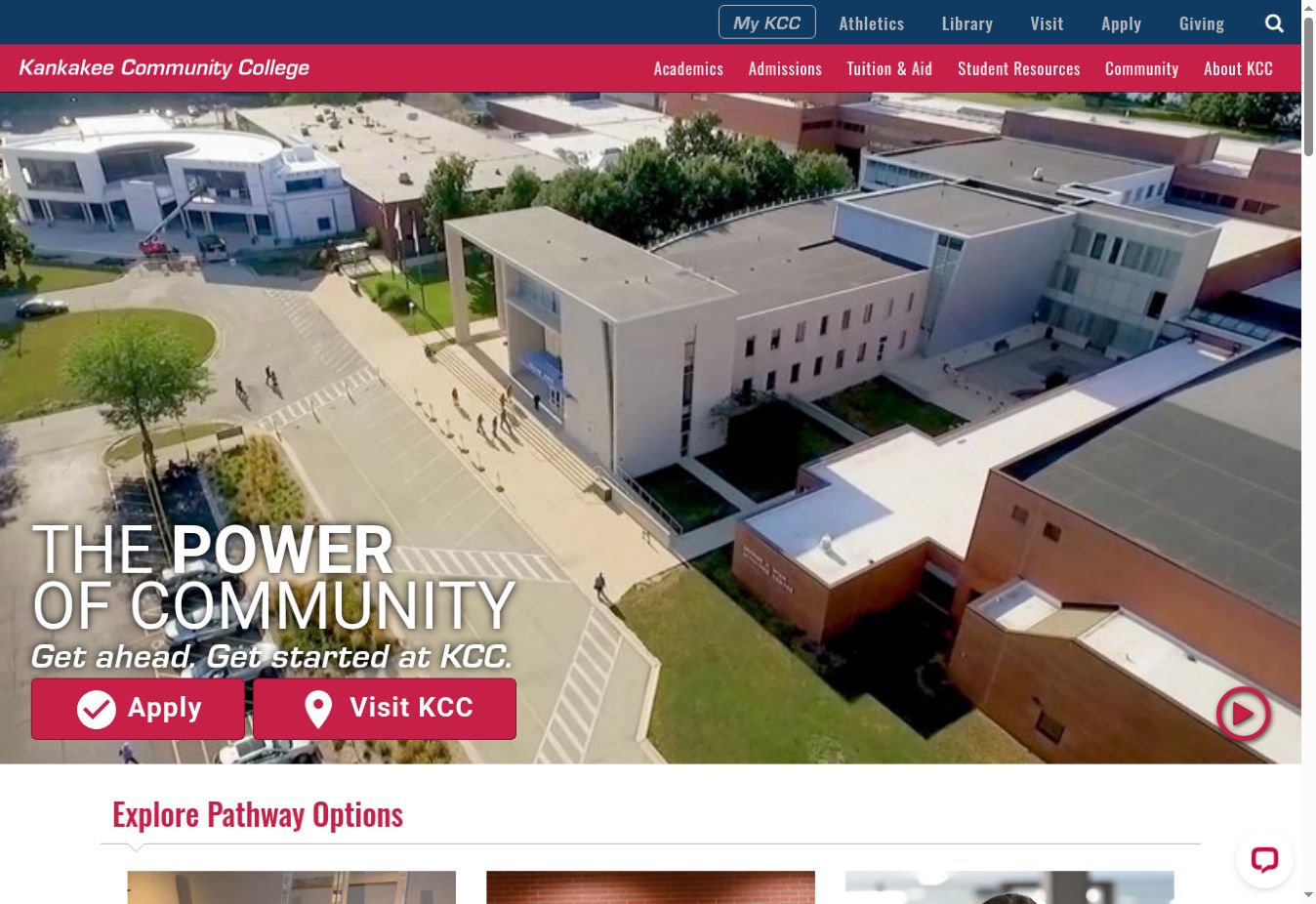
My contribution and delivery
I helped move KCC’s public website from departmental SharePoint editing to a publishing model that reduced corrective content rework and gave a small internal team clearer control over quality and standards. The redesign began with an outside consultant, my web developer, and me; its 2018 planning scope covered more than 1,200 pages across the public website and related sites. We adopted Jekyll, CloudCannon, GitHub, and Google Sheets-driven content workflows.
When COVID disrupted normal operations and the college could no longer continue retaining the consultant, I took over the remaining work with my web developer. We completed the redesign, migration, and related site/subsite work remotely and launched the architecture that continues to support kcc.edu.
Problem
Departments previously published directly in SharePoint. This created recurring work for Web Services to correct inconsistent content and page structure after publication. The redesign needed to replace the aging platform and establish clearer control over how public content was created, reviewed, and maintained.
Key constraints
- The redesign and migration were already underway with consultant involvement.
- COVID disrupted normal collaboration and project continuity.
- The consultant could no longer remain on the project.
- The main site and related sites/subsites still needed to be migrated into the new model.
- The internal web team needed to support the architecture long-term.
- Remote coordination became the working model.
Architecture and publishing decision
Jekyll generates the public site, CloudCannon supports content editing, and GitHub holds the source code and version history. Structured content workflows, including Google Sheets-driven patterns, support repeatable publishing. This architecture gave the internal team greater control over templates, content structure, and long-term maintenance.
My web developer and I now manage page creation and updates, supported by a small group of marketing content editors and authors. Centralized publishing allows us to address content quality, page structure, and accessibility standards before publication, reducing the corrective rework created by the previous departmental editing model.
Results
The architecture uses free and low-cost tools that a small internal team can maintain. Centralized publishing reduced time spent correcting inconsistent departmental content and strengthened control over page structure, accessibility, and publishing standards.
Academic Programs: launch, review, and refinement
Student discovery
The same operating model supports ongoing improvements to how students discover academic programs. I helped shape that work with our web developer, Marketing, academic departments, and other stakeholders. We moved beyond catalog-only information toward program pages with career context, videos, clearer calls to action, and Lightcast labor market data. The goal was to help students understand their options, career opportunities, and academic pathways.
Launch and review
The redesigned Academic Programs page launched in August 2025 with updated navigation and a pathway-based structure. During the launch-period review, college leadership agreed the structure was a significant improvement and should remain intact. We identified content and discoverability as the next priorities: clearer pathway terminology, introductions aligned with student goals, stronger metadata and internal links, and structured data where appropriate.
Next investment
Our web developer took on the follow-up content and search enhancements, with continued executive sponsorship. We agreed to monitor engagement, search performance, and how effectively the content guided students toward next steps. The review gave the team a focused improvement plan while preserving the completed structural work. By July 2026, the broader program-page effort included expanded schema and further search improvements, with additional content still being refined.
Search and AI discovery
This work connects traditional SEO with Answer Engine Optimization (AEO) and Generative Engine Optimization (GEO): improving how program information can be found and understood through search engines and AI-generated answers. My contribution brings student-focused content strategy together with metadata, structured data, and ongoing review of discoverability.
Strategic value
This project moved from consultant-supported redesign to internal ownership under COVID-era constraints, resulting in a durable static-site web ecosystem that continues to support KCC’s public digital presence today. It also established an operating model that supports accessibility, analytics, content standards, search visibility, and future AI-readiness work.